
Gozo
The Golden Calf of Gozo
L-Għoġol tad-Deheb
Children’s reading · All ages
The Treasure Nobody Could Show
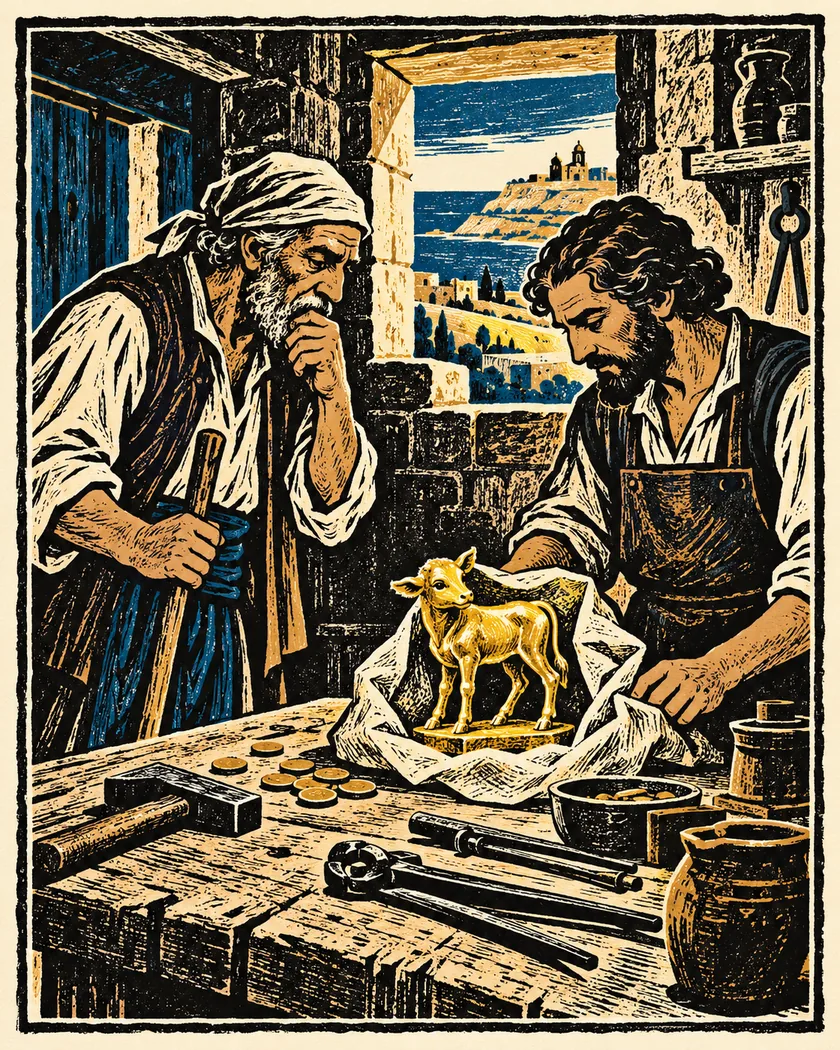
A farmer called Sidor was working in Gozo when, in the old story, he found something shining in the ground: a little golden calf.
He took it to Calogero, a goldsmith who knew about precious metal.
“You cannot keep that,” said the goldsmith. “It belongs to the ruler. I will deal with it for you.”
He handed Sidor a few coins and took the calf.
At home, Sidor told his wife. She frowned.
“A few coins for a golden statue? That sounds wrong.”
Soon people were asking questions. But when they asked to see the treasure, Calogero could not—or would not—show it. The calf had vanished from the story’s reach.
Was it buried again? Hidden somewhere? Had there ever been a calf at all?
People still enjoy the mystery. Historians have studied a real old accusation about a golden calf, and they question whether the treasure existed. A good detective needs more than a shiny tale. A good detective asks for evidence.
Adults’ reading
The Value of a Rumour
The object is small enough to carry. The trouble it creates is not.
In the popular Gozo tale, a farmer called Sidor finds a golden calf and asks a goldsmith, Calogero, to value it. The goldsmith invokes the ruler’s rights over treasure and takes the object in exchange for a meagre payment. The farmer’s wife recognises the unfairness. Questions reach the authorities. The calf disappears, and its hiding place becomes the tale’s enduring mystery.
It is a satisfying story about greed: the precious object changes hands, the expert abuses another man’s trust, and secrecy takes over.
The historical material is more disturbing. A 1729 case concerned Antonio Pace’s alleged discovery and Giuseppe Cassar’s supposed possession of the treasure. Cassar was tortured and died; his property was confiscated. These historical names must not be casually substituted for the folk characters.
William Zammit’s archival research questions both the treasure’s existence and Cassar’s guilt. The documents allow the possibility that accusation, revenge and the appropriation of wealth were more important than any golden object.
That is not a settled answer to every detail of the case. It is a strong reason to stop saying that a calf was certainly found.
For Malta Tells, the mystery can hold an audience twice. First, where did the treasure go? Then, what happens if everyone believes a treasure story before anyone can prove it?
The second question changes the value of the first. A rumour may enrich a legend. In the hands of power, it may also cost someone far more than gold.