
Malta
St Paul and the Fire on the Shore
San Pawl u l-Lifgħa
Children’s reading · Ages 7+
A Welcome after the Storm
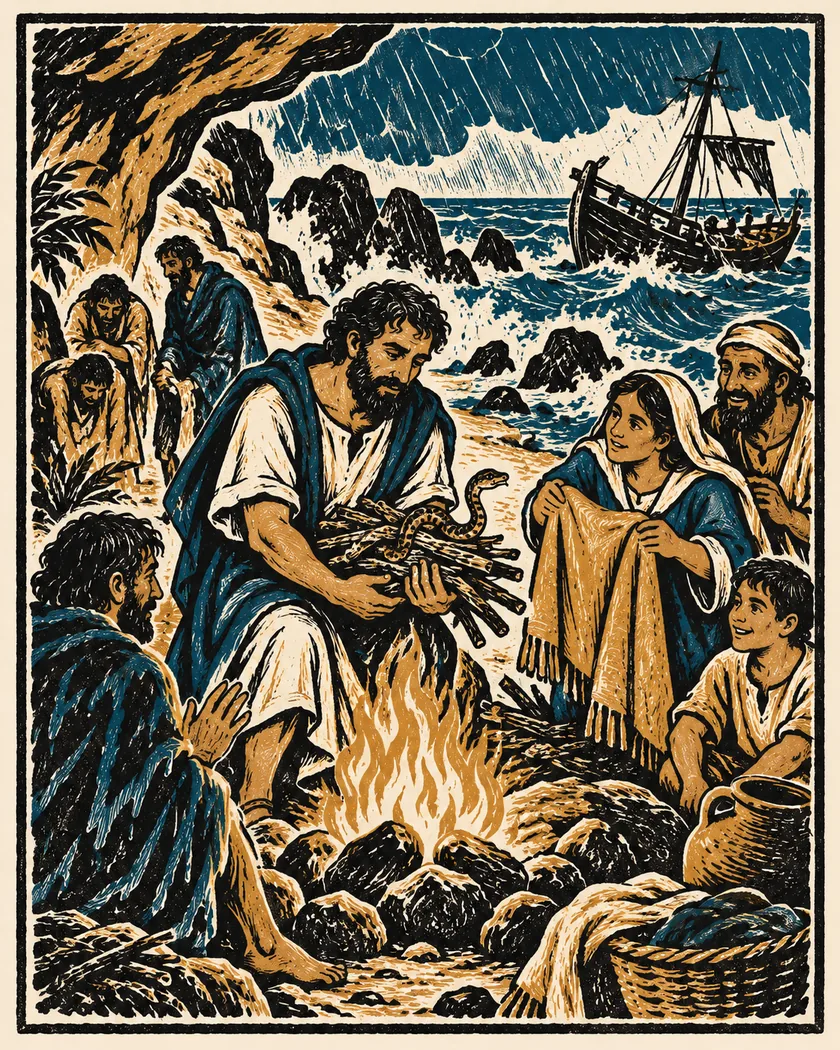
After a terrible storm, Paul and the other people from his ship reached land. They were wet, tired and cold.
The island was Malta. People living there came to help them. They made a fire so the survivors could warm themselves.
Paul gathered sticks too. As he put them near the heat, a viper came out and bit his hand.
Everyone was worried. But the Bible story says Paul shook the snake away and was not harmed. The people watched in amazement.
A man called Publius then welcomed the travellers. When Publius’s father was ill, Paul prayed for him, and the story says he became well.
The visitors stayed on Malta for three months. When they were ready to continue their journey, the islanders gave them supplies.
Many people remember the snake. But there is another important part to remember: the welcome. Before anyone knew what would happen next, people saw cold strangers on the shore and helped them. That was something they could do straight away.
Adults’ reading
Before the Miracle
Before the viper appears, somebody makes a fire.
That small act gives the Malta episode in Acts its human beginning. The survivors have reached land after disaster, and the islanders respond to the rain and cold. Hospitality comes before recognition. They do not need to know who Paul is to see that he needs warmth.
Paul gathers firewood. A viper emerges from the heated bundle and fastens on his hand. The observers immediately give the event a moral explanation: perhaps this man has escaped the sea only to meet punishment on shore.
When he shakes off the snake and remains unharmed, their judgement changes just as quickly. They take him to be divine.
The passage is a religious narrative, and its miraculous claim should be presented as such. It is also a striking account of how people interpret a stranger: a frightening incident becomes evidence of guilt, then evidence of extraordinary status.
Publius’s hospitality and his father’s healing follow. After three months, the travellers leave with provisions given by the islanders.
Maltese tradition has attached the episode to particular sites and developed additional stories around it. Acts itself does not identify a modern bay with archaeological precision, or establish that every Maltese snake was transformed.
For an audience beside the Malta Tells balcony, the most immediate part of the story may be the action that needs no miracle. People arrive in trouble. Others make room for them, offer warmth and help them continue.
It is easy to stage the snake. The fire of welcome deserves just as much attention.