
Xagħra, Gozo
Sansuna and the Great Stones
Sansuna u l-Ġgantija
Children’s reading · All ages
The Builder with a Baby
How do you carry a stone bigger than a doorway? In an old Gozo story, you ask Sansuna.
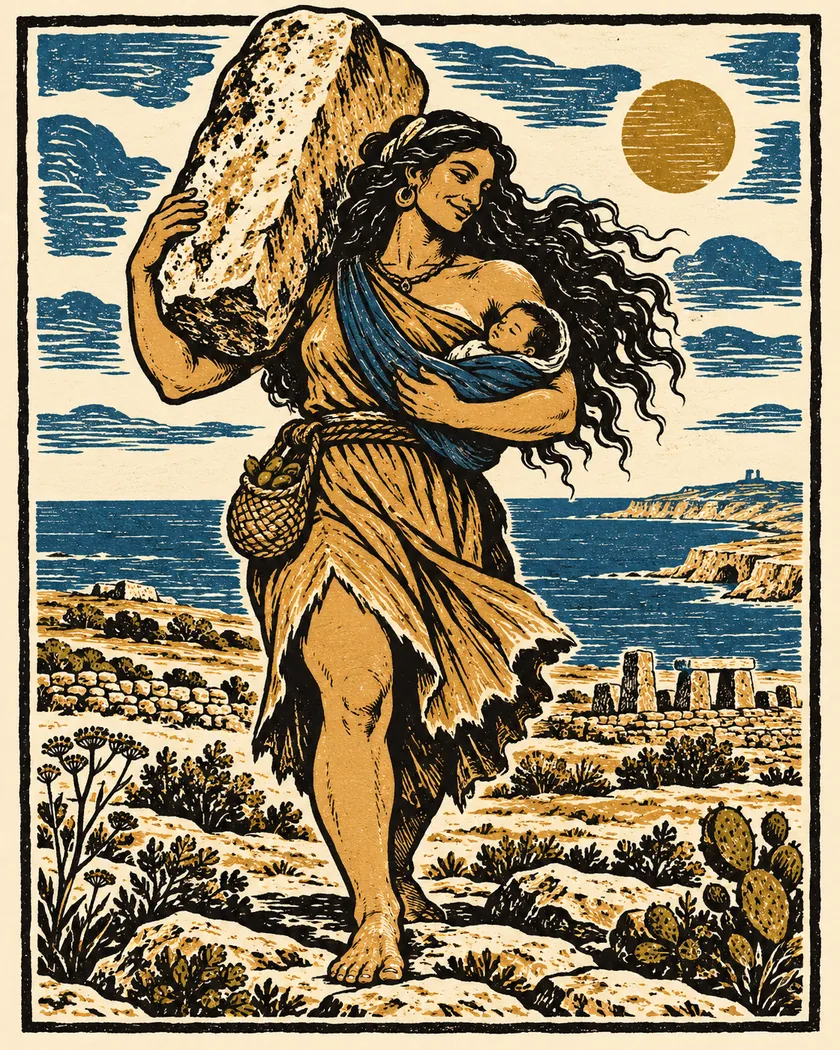
Sansuna was a giantess. She could lift great blocks of rock that ordinary people could hardly move. But she had another important job: looking after her baby.
One bright morning, she settled the little one safely against her and chose an enormous stone.
“You are heavy,” she told the rock. “But at least you do not need a nappy!”
Across the island she went, carrying stones for the great buildings at Ġgantija. When the baby wriggled, she paused. When the baby settled, she worked again. Even a giantess needed a break and something to eat. In one version of the story, her favourite foods were broad beans and honey.
People stared at the growing walls. How could one mother do so much?
Today, the stones still amaze visitors. Real people built the temples long ago, but Sansuna belongs to the wonderful stories told about them. And in her story, even the strongest builder makes time for a small child.
Adults’ reading
The Weight of a Stone
The stone looked immovable until Sansuna put her hand beneath it.
That is how we might begin the story in Gozo: with something impossibly heavy, and a woman who has another task waiting before the first is finished. Her child rests against her shoulder. The temples need stones. Both demands must somehow fit into the same day.
In the legend, she carries the megaliths with a strength that makes ordinary measures useless. A rock that would defeat a village becomes another load to lift. Yet the baby interrupts the work with an authority no stone possesses.
She stops. The vast landscape waits while she adjusts the little body against her.
“There,” she murmurs. “Now we can continue.”
Storytellers give her broad beans to eat. Some add honey; others speak of water. Such homely details bring the giantess close enough to recognise. She is extraordinary, but she still has to feed herself.
At Ġgantija, the surviving walls offer a different kind of wonder: the achievement of people working in the distant Neolithic past. Archaeology does not need a giantess to explain their humanity or skill. Folklore gives that achievement a memorable face.
Sansuna’s story turns monumental labour into a mother’s working day. Visitors can look up at the stones and imagine power. They can also imagine interruption, patience and care.
Perhaps that is why she remains such a useful companion at these ruins. The walls ask us to think about what people can build. Sansuna asks what they must carry while building it.