
Għarb and Ras San Mitri, Gozo
San Dimitri and Żgugina’s Lamp
San Dimitri u Żgugina
Children’s reading · Ages 7+
The Rider in the Picture
Żgugina loved her son Mattew. They lived near Għarb, on the island of Gozo.
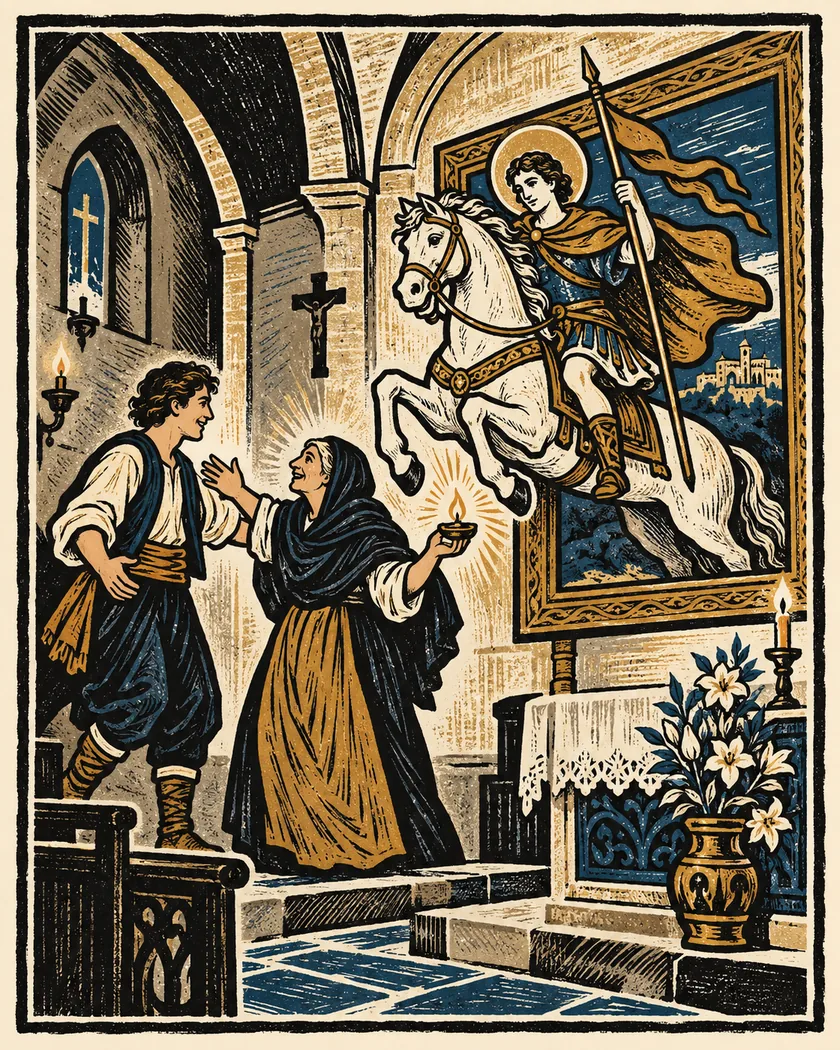
One day, corsairs took Mattew away on their ship. Żgugina hurried to the little chapel of San Dimitri. Above the altar was a picture of the saint on horseback.
“Please bring my son home,” she prayed. “I will keep a lamp shining here to say thank you.”
In the legend, something wonderful happened. The horse in the picture moved!
San Dimitri rode out of the painting and away towards the sea. Żgugina waited, listening.
At last, she heard hooves. The rider had returned—and Mattew was with him!
Mother and son held each other close. Then San Dimitri returned to his picture.
Żgugina kept her promise. She lit an oil lamp in the chapel.
Some storytellers add that an old chapel later slipped into the sea, and its light still shone beneath the water. That is another part of the legend. Whenever you see a tiny lamp in a dark place, you might remember Żgugina’s big thank-you.
Adults’ reading
A Light Kept for a Promise
Żgugina could not follow the galley. That was the terrible simplicity of it. Her son was being taken away, and the sea put him beyond her reach.
She went to the chapel of San Dimitri near Għarb. In the painting above the altar, the saint sat on a horse, motionless as he had been on every earlier visit.
Now she asked the figure to do what she could not.
Bring Mattew back, she prayed, and she would keep a lamp burning in gratitude.
The legend allows the painting to answer. The horse moves. The saint comes out of the frame and rides towards the ship. After a wait that a storyteller may stretch or shorten, he returns with the young man.
For Żgugina, the reunion is everything. For the people who keep telling the tale, the promise matters too. The lamp continues after the excitement of the rescue has passed. Gratitude becomes something tended, day after day.
There are several accounts of the abduction, and a separate ending carries the story beneath the sea. In that coda, an old chapel falls into the water but remains intact; sailors or fishermen glimpse its light in the depths.
These are traditions, not a report establishing that a submerged chapel or miraculous lamp has been found. They show how a local story can grow around a coast, a sacred image and a remembered fear of captivity.
The remarkable thing is the change in scale. A rider crosses the sea to save a life. A woman answers that grand gesture with a small flame. The story leaves us with the flame.