
Xagħra and Ramla Bay, Gozo
Calypso and the Voyage Home
Kalipso u Ulisse
Children’s reading · Ages 8+
The Raft That Meant Home
Odysseus had travelled a long way. After a shipwreck, he reached the island of Calypso, a magical being called a nymph.
Her island was beautiful. There was food, shelter and shade. But Odysseus missed his home and his family.
“I want to leave,” he said.
Calypso wanted him to stay, and for a long time she would not let him go. A lovely place can still feel lonely when you cannot leave it.
At last, Hermes, the messenger of the gods, arrived with an order: Odysseus must be allowed to continue his journey.
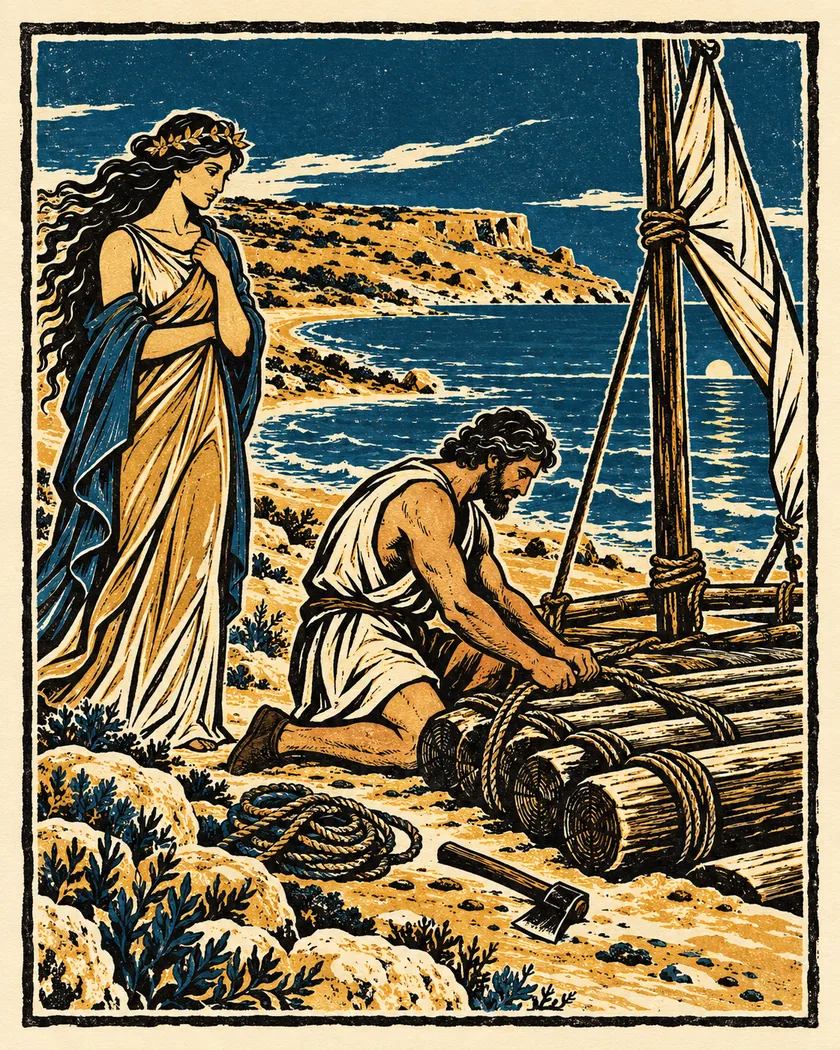
Calypso gave him tools and helped him prepare. He cut timber and built a raft. He added a sail and packed food and water.
When the wind came, he set out. There were more adventures ahead, but he was moving towards home again.
In Gozo, people have linked this Greek story to a cave above Ramla Bay. No one knows for certain that Homer meant Gozo. Still, looking across the sea, it is easy to imagine a traveller watching the horizon and wishing for home.
Adults’ reading
The Island He Could Not Leave
The island offers beauty, shelter and abundance. Odysseus goes down to the shore and grieves.
That uncomfortable image is central to the episode in Homer. Calypso has saved him after disaster, but she will not let him leave. The man who has survived war and shipwreck cannot choose where to spend his life.
He wants Ithaca. He wants Penelope. Calypso offers an existence beyond the ordinary limits of human life, yet the offer does not answer what he asks for.
When Hermes arrives, he carries a decision from Zeus: the traveller must be released. Calypso objects to the gods’ judgement, then prepares to help him depart. The tools and provisions are practical things, and that practicality changes the mood of the story. Longing becomes work.
Odysseus cuts timber, joins it, makes a sail and readies a raft. Each piece gives his wish a shape. Departure does not promise safety; further danger lies ahead. It gives him movement and the possibility of return.
In Gozo, the story has become associated with Calypso’s Cave overlooking Ramla. The connection is part of the island’s cultural imagination. It is not proof that Homer’s Ogygia was Gozo, and the cave should not be presented as an authenticated address for the nymph.
The local view nevertheless suits the story: a beautiful coast, an open horizon, and enough sea to make home feel far away.
For an adult listener, Calypso’s episode asks more than whether the island was enchanting. It asks what enchantment is worth when someone else decides that you must remain.